The Hard Questions Should Not Be a Surprise
Most IP budget conversations follow the same pattern. Numbers get presented. Someone asks why costs went up. Someone else asks what happens if the budget gets cut. A third person asks what the portfolio actually protects.
If those questions are surprises, the meeting becomes defensive. If they were anticipated, it becomes strategic.
Know the Key Questions Behind the Numbers
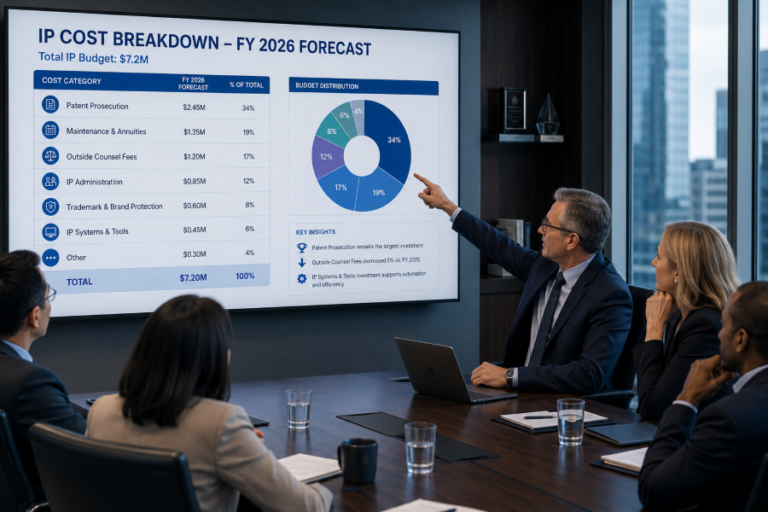
Why did costs change from last year? Have a specific answer. Not “costs went up a bit” but “maintenance costs increased because 22 patents granted and entered the annuity schedule across 14 jurisdictions.”
What are we actually protecting? Which products, technologies, or markets does the portfolio cover? Are there assets covering things the business no longer does?
What happens if we cut X percent? If you do not have a scenario ready, you will build one in the room under pressure. That is not where you want to do that work.
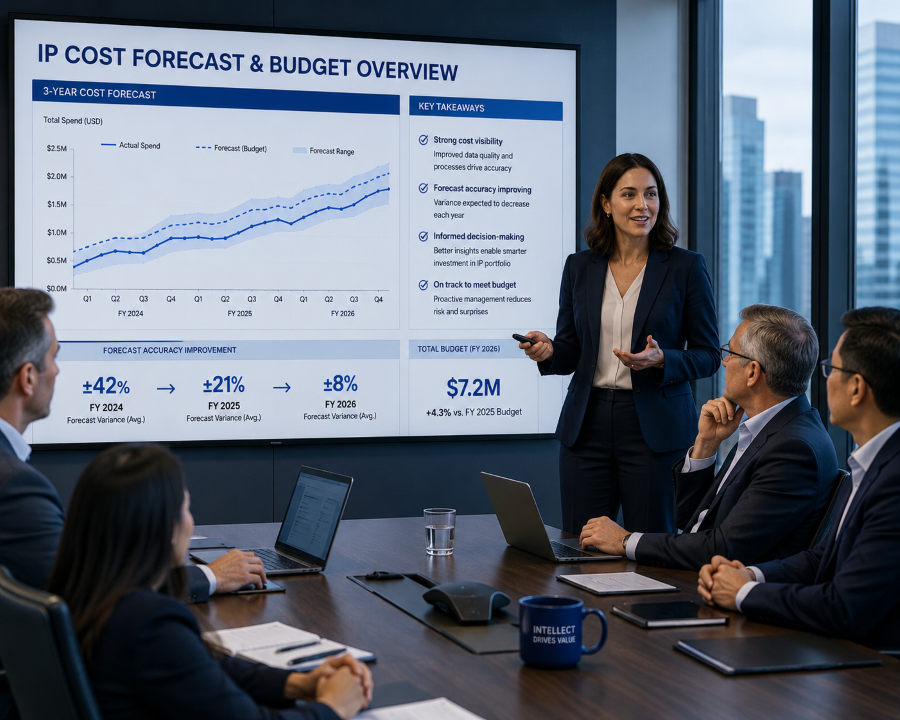
Is this number going to hold? Know your biggest sources of variance: prosecution volume, FX movement, fee schedule changes, and be honest about the range.
Lead With the Story, Not the Spreadsheet
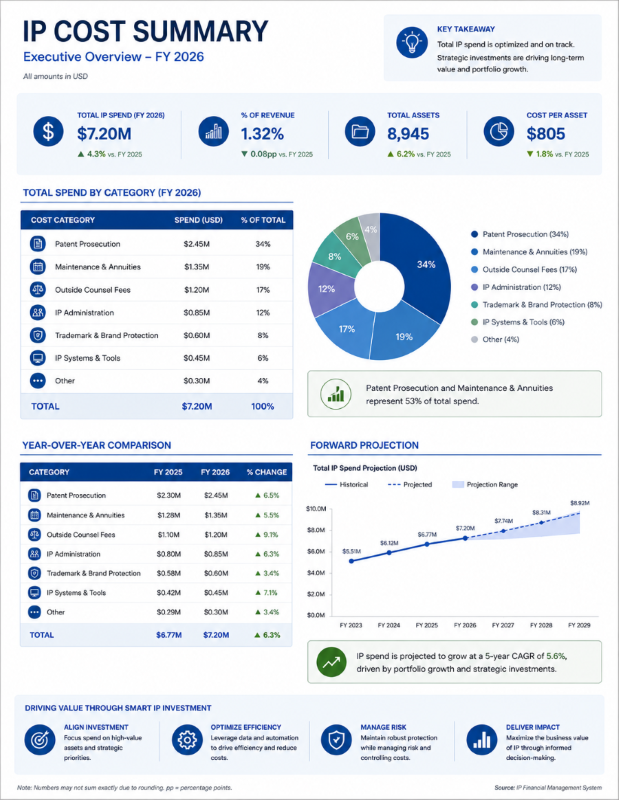
Most leadership teams do not have the IP background to interpret line-item detail without context. Lead with three or four sentences explaining what the budget reflects, portfolio size, key cost drivers, what changed, and what the outlook is. Then offer the detail for anyone who wants it.
The questions get better when leadership understands the story first.
Have the Scenario Ready Before Anyone Asks
A base case is the minimum. A reduction scenario and a growth scenario ready before the meeting changes the dynamic entirely. You are not reacting; you are presenting options.
Make the reduction scenario specific. Not “we would spend less,” but “at 15%, we would exit maintenance in these jurisdictions and defer these filings, which affects coverage in these markets.” Specific scenarios get taken seriously. Vague ones generate more questions.
Connect Costs to Business Value
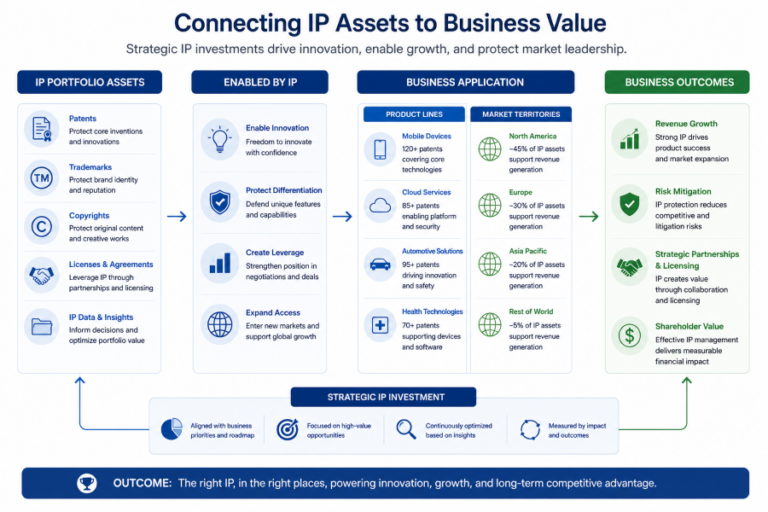
IP costs without business context look like overhead. The same budget reads as strategy when it is connected to specific products, markets, or competitive positions.
You do not need a full IP value analysis. You need to answer “What does this protect?” for the major cost lines quickly, without hesitation.
Like this kind of stuff?
Learn more about the IP Financial Planning: IP Financial Planning
Want to see IP cost forecasting in action?
Find out here: Global IP Forecaster