
Most IP Budgets Are Just Last Year's Number Plus a Guess
If your IP budget starts with “what did we spend last year?” and ends with a percentage adjustment, you’re not alone. But that approach assumes your portfolio, your filing activity, and the global fee landscape all stayed roughly the same. They rarely do.
A proper IP budget accounts for what’s actually changing in your portfolio and gives you a number you can defend when your CFO asks where it came from.
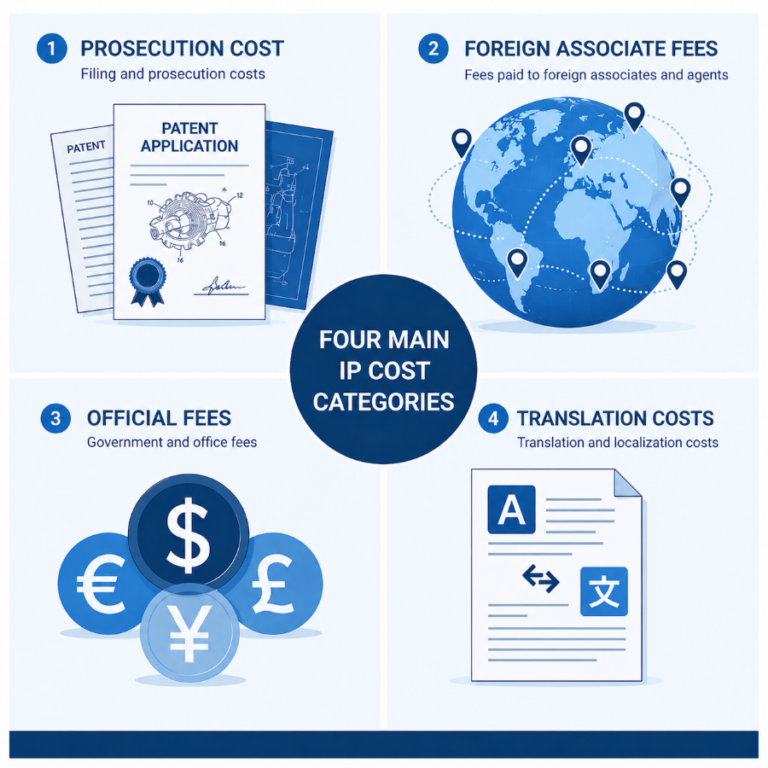
The Four Cost Categories Every IP Budget Needs
Most IP budgets miss at least one of these:
Official Fees — Government fees paid directly to patent and trademark offices. These change regularly, sometimes with little notice, and vary significantly by country.
Foreign Associate Fees — What you pay to local agents and attorneys in each jurisdiction to handle filings, responses, and renewals. Often the largest and least visible cost driver.
Translation Costs — Required in many jurisdictions for patent applications and renewals. Easy to underestimate when entering new markets.
Prosecution Costs — Office actions, responses, appeals, and examination fees that are hard to predict but tend to cluster in waves.
If your budget doesn’t break these out separately, you don’t have visibility into which one is running over — and you can’t fix what you can’t see.
What Actually Changes Your Budget Year Over Year
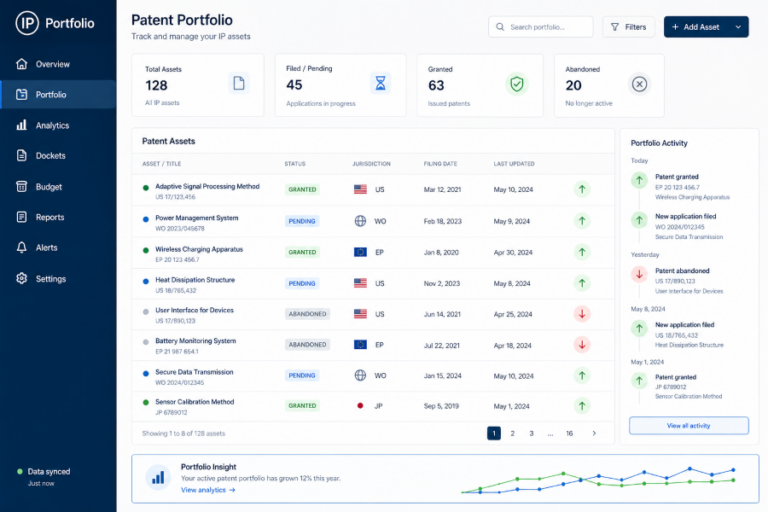
Portfolio changes are the biggest driver of budget variance, and they’re completely predictable if you track them:
- New applications entering prosecution add costs you didn’t have last year
- Patents that grant start generating annuity obligations
- Assets that are abandoned or expired drop off — but often with a lag before the savings show up
- Expansion into new jurisdictions adds foreign associate and translation costs that can be significant
If you’re not modeling these movements explicitly, your budget will be off before the year even starts.
How to Build Scenarios That Actually Help
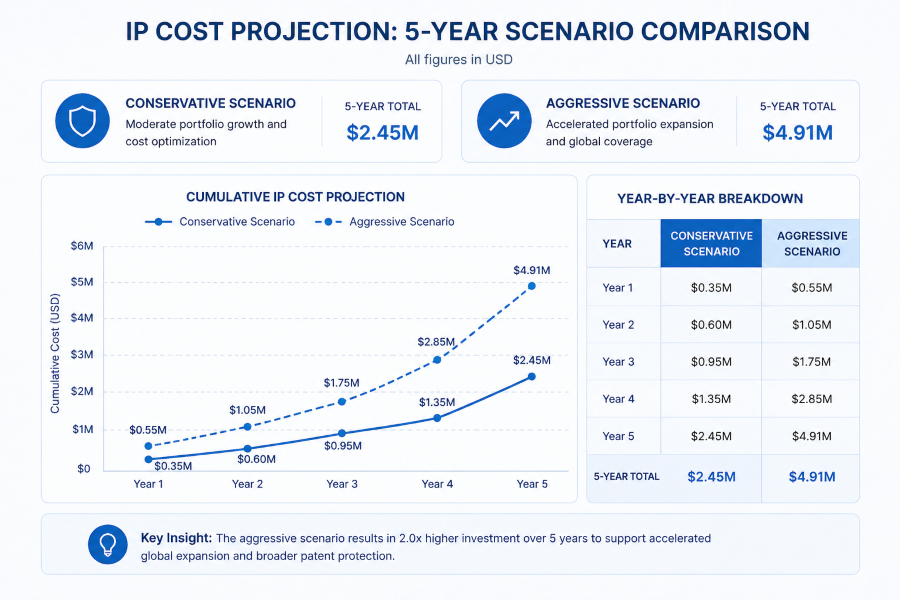
One budget number isn’t enough. Smart IP teams build at least two or three scenarios:
- Base case — current portfolio, current filing pace, no major changes
- Growth case — what if we expand filings into APAC or Europe next year?
- Constraint case — what if the budget gets cut 15%? Which assets do we have to let go?
Having these scenarios ready before budget season means you’re not scrambling when the question changes. And it means you can show leadership the tradeoffs clearly, rather than just defending a single number.
The Questions Your CFO Will Ask
Here’s what finance wants to know, and what a well-structured IP budget can answer:
- What are we spending and why?
- Where are costs going up, and what’s driving it?
- If we cut the budget by X, what do we lose?
- What’s the cost of filing in a new market?
If you can answer all four with data rather than estimates, you’ll have a much easier conversation.
Making It Less Manual
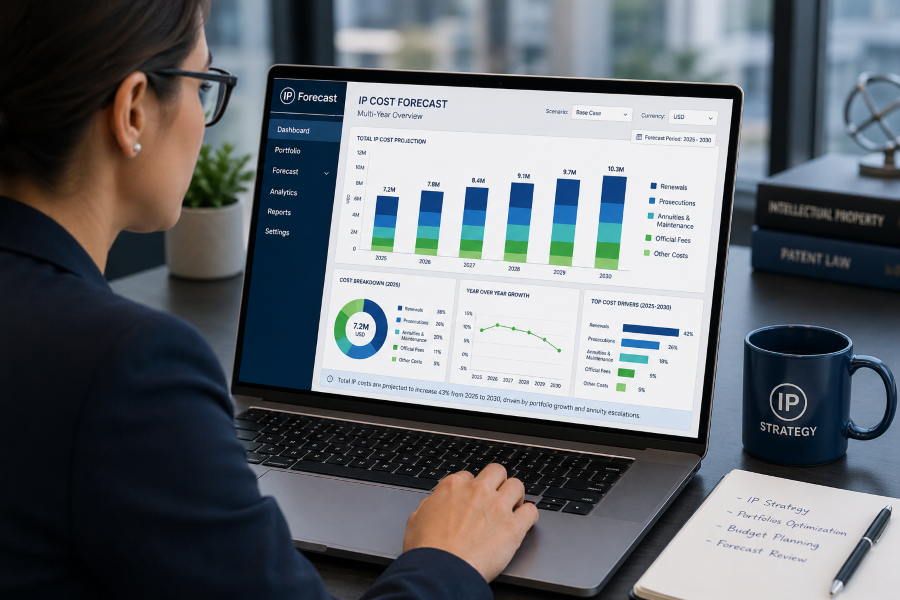
Building this kind of budget from scratch in a spreadsheet takes days or even weeks and is hard to keep current. Prokurio’s IP budgeting tools let you model your portfolio costs across jurisdictions, run scenarios, and track how your actual spend compares to your forecast without rebuilding everything from scratch every year.
If you’re heading into budget season and want a better process, it’s a good place to start.
Questions about IP budgeting?
Reach us at support@prokurio.com
Like this kind of stuff?
Explore our IP cost planning tools here: Prokurio for IP Owners
Want to learn more about forecasting IP costs?
Learn more here: Global IP Forecaster