- Updated
Short answer
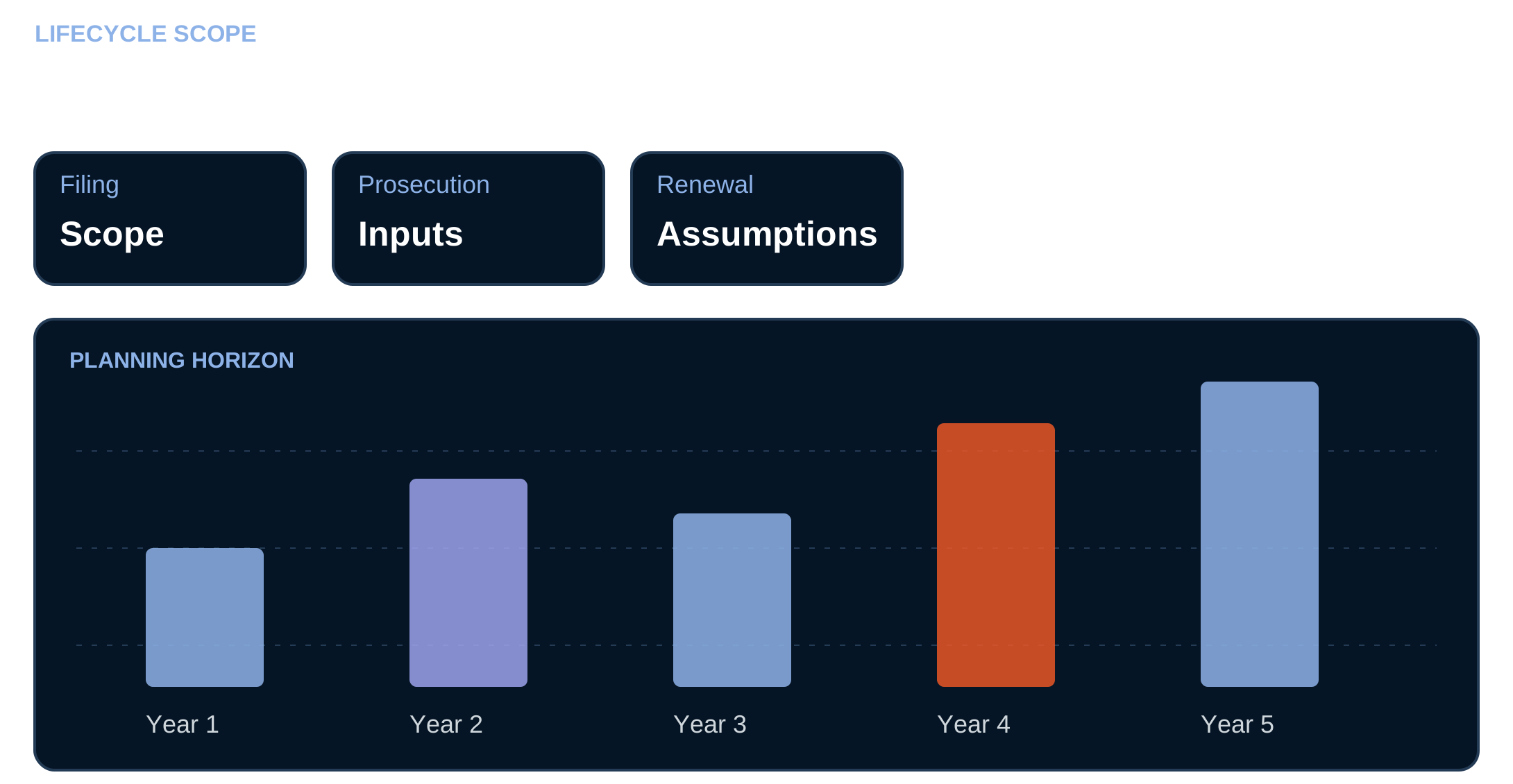
Make the period, portfolio and cost categories explicit. Show what is included, what is excluded, and which activities depend on assumptions, rather than presenting a total without its scope.
Make the scope visible
Separate events, assumptions and exclusions to make the forecast scope clear.
| Planning area | Record in the forecast | Make explicit |
|---|---|---|
| Filing and entry | Relevant matters, jurisdictions and intended activity | Which matters and activities are excluded |
| Prosecution | Scheduled activity and conditional work as separate inputs | Triggers and assumptions requiring review |
| Grant and renewal | Applicable future events within the chosen horizon | Obligations that may fall beyond the horizon |
On smaller screens, scroll the table sideways to compare columns.
Check current US official fees: USPTO fee schedule.
A worked scope record
Hypothetical scope example · no fee estimate
- Portfolio
- An illustrative group of existing patent matters and proposed filings.
- Horizon
- Five planning years from a documented start date.
- Included
- Explicit cost categories attached to events and assumptions.
- Excluded
- Any unmodelled work is named, rather than silently omitted.
- Review trigger
- A change in matter status, planned activity or source assumptions.
Next: collect the portfolio inputs ↗Return to IP Forecasting ↗
Keep exploring IP Forecasting
Focused answer
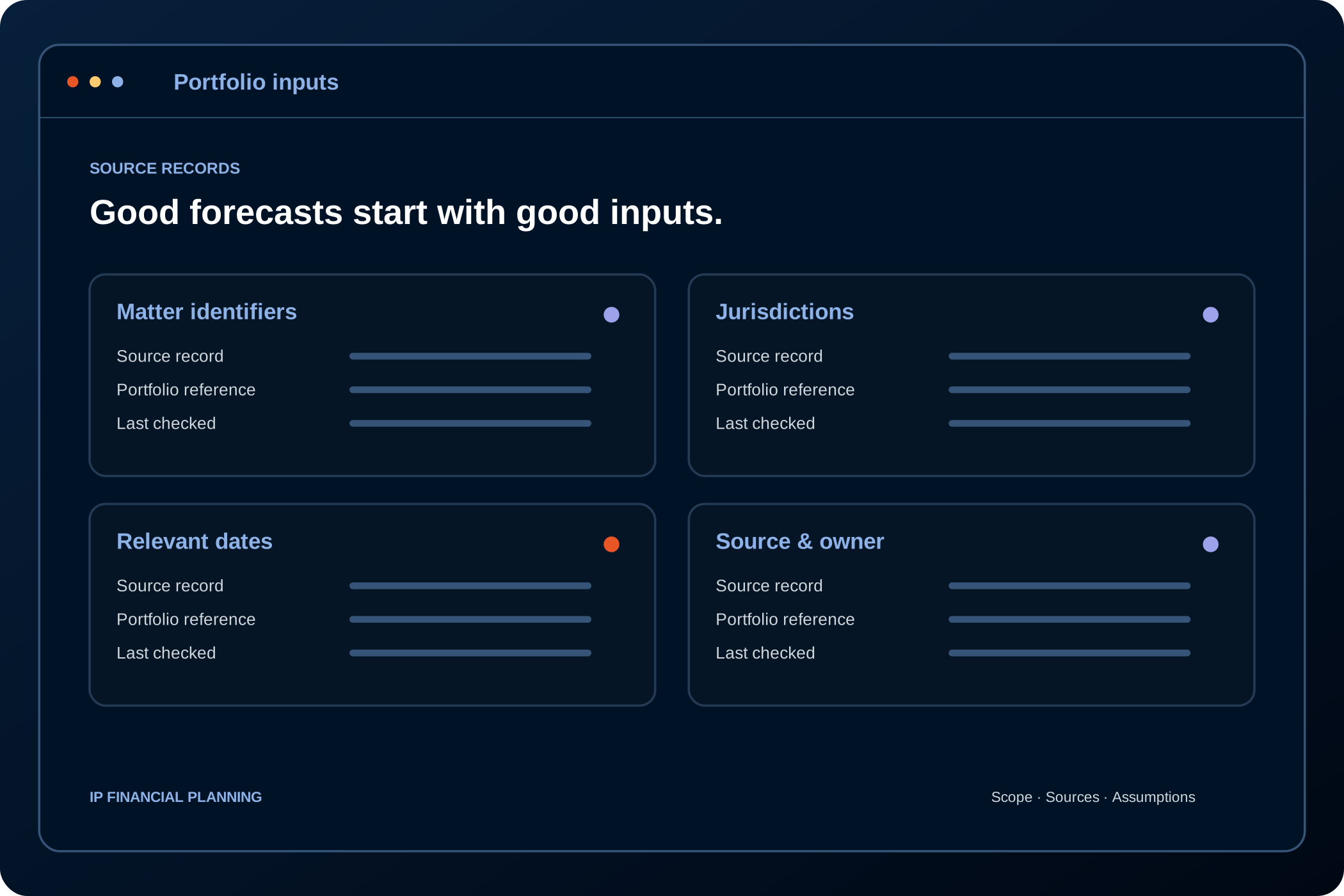
What portfolio data do I need before building an IP cost forecast?
Use a field-by-field checklist to separate known inputs from gaps that need review.
Focused answer
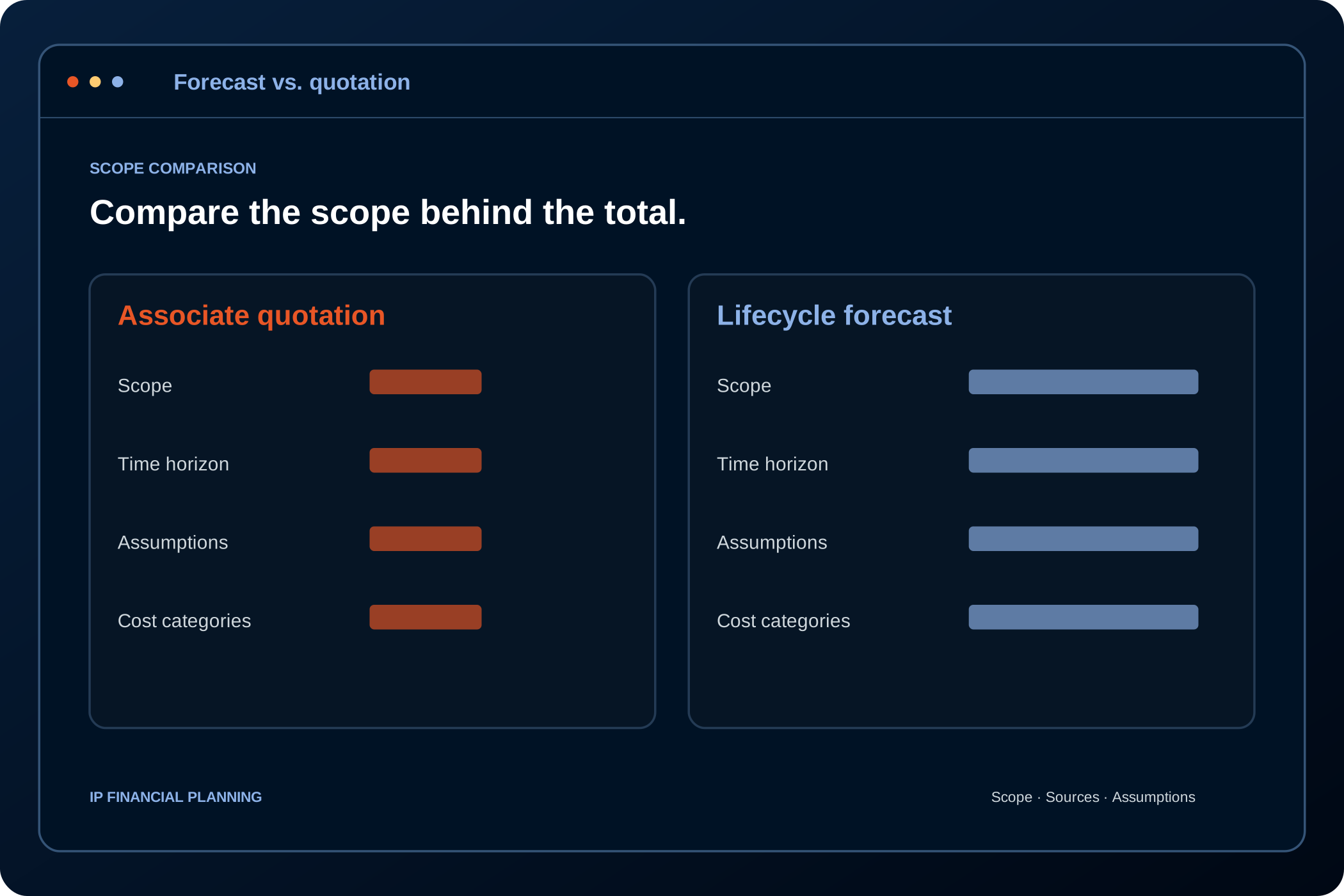
Why is an IP cost forecast different from a foreign associate quote?
Compare the scope of a quotation with the assumptions behind a lifecycle view.
Focused answer
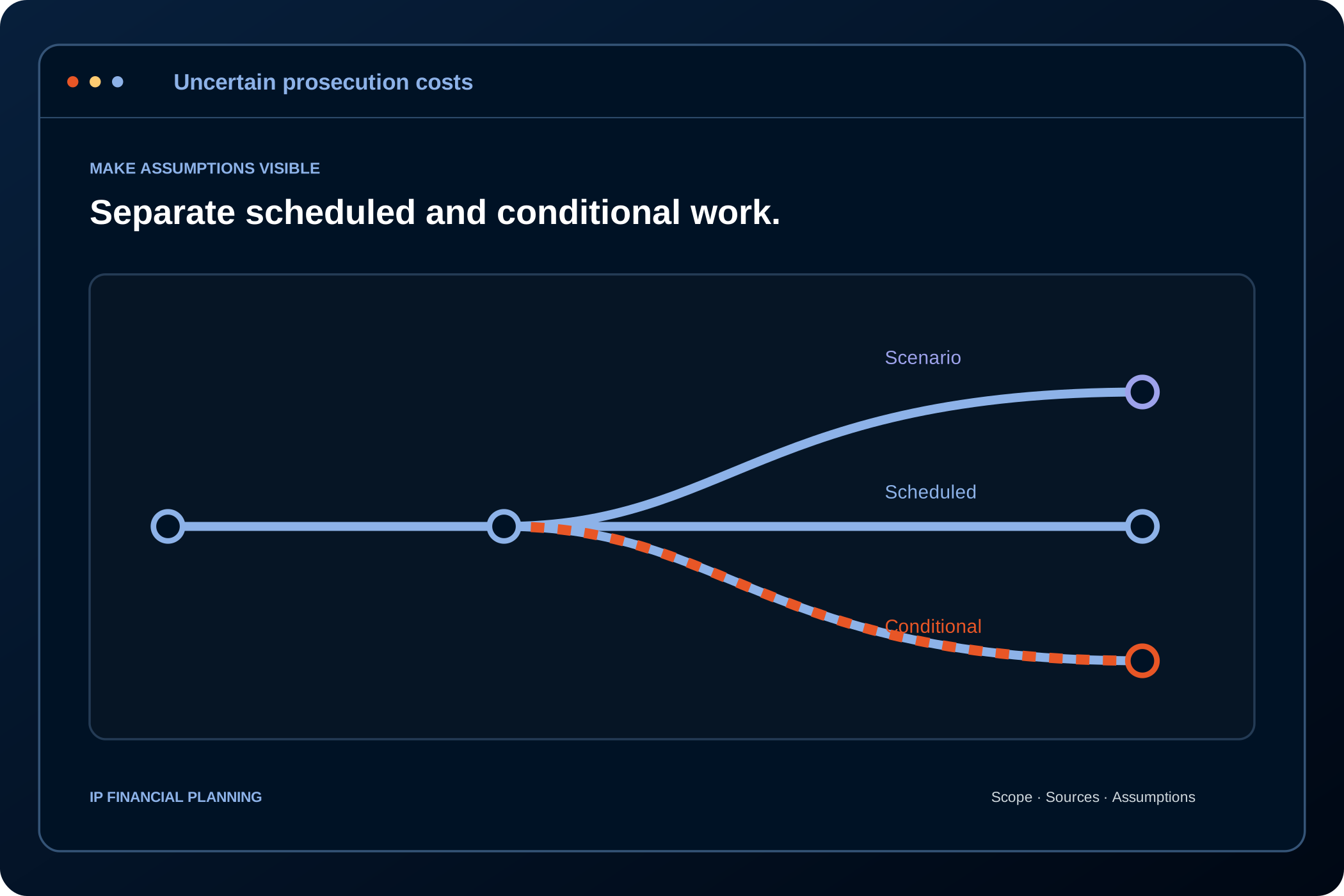
How should an IP forecast show uncertain prosecution costs?
Separate scheduled work from conditional events without inventing probabilities.
Bring the planning questions together.
Explore how Prokurio approaches forecasts and estimates.