IP Financial IntelligenceFocused answerIP Forecasting
Updated
Short answer
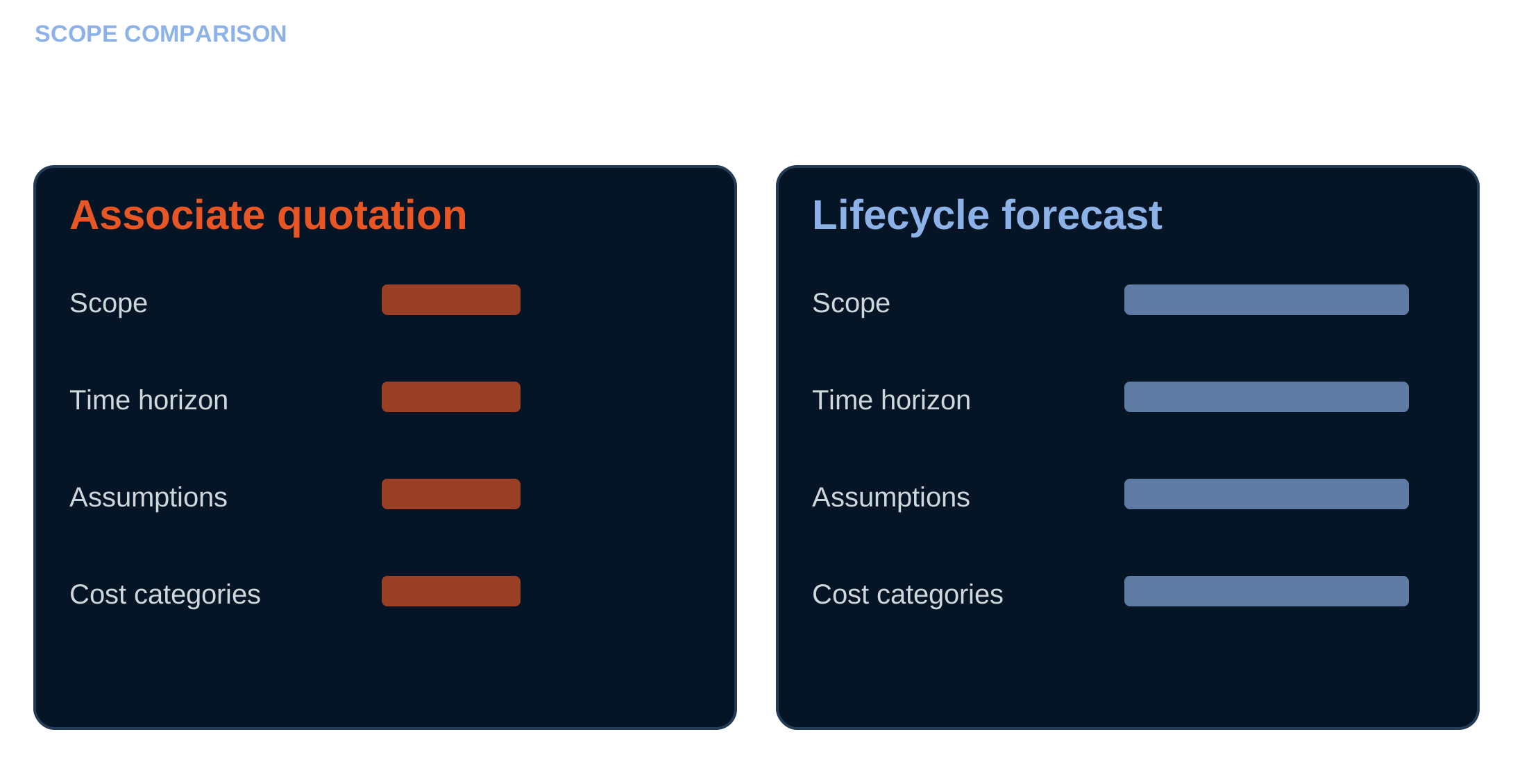
A quotation and a forecast answer different scope questions. Compare the work, period, cost categories, currency and exclusions in the actual records before comparing their totals.
Compare the scope, not just the total
Use the actual quotation and forecast assumptions. Neither label alone establishes what is included.
Scope comparison worksheet
Check
Specific quotation
Lifecycle forecast
Scope
Read the quoted activities and exclusions
Read the modelled matters, events and exclusions
Timing
Confirm the quoted work and validity period
Confirm the forecast horizon and event timing
Costs and currency
Check fee, service, currency and tax treatment
Document the corresponding assumptions and sources
On smaller screens, scroll the table sideways to compare columns.
Make the comparison reviewable
✓
Match like with like
Reconcile differences in work, period and currency before comparing totals.
✓
Retain the evidence
Keep the quotation, scope notes and forecast assumptions with the comparison.