IP Financial IntelligenceFocused answerIP Forecasting
Updated
Short answer
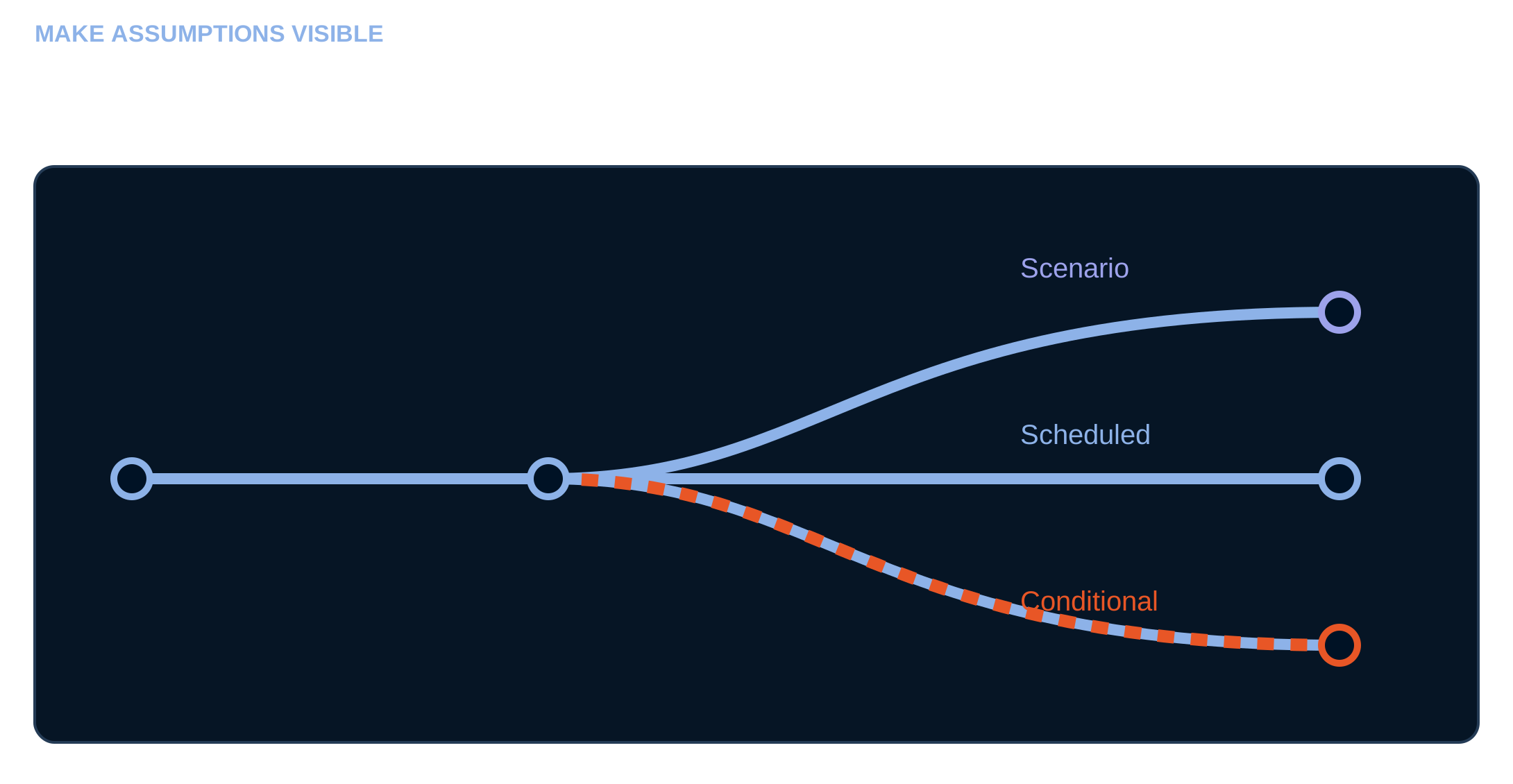
Distinguish scheduled events from conditional work. Record the trigger, evidence and review point for each assumption, and avoid assigning probabilities without support.
Separate scheduled and conditional work
An illustrative review path, not a legal procedure or a probability model.
Is the event supported by the current record?
If yes
Record the event, timing and source.
If no
Flag the missing input for review.
Does the work depend on a future trigger?
If yes
Describe the trigger and keep conditional work distinguishable.
If no
Record the basis for treating it as scheduled activity.
Is there evidence for a scenario assumption?
If yes
Document that evidence and its review date.
If no
Do not invent a probability or present a range as validated.
Record the assumption beside the scenario
Hypothetical scenario record
Baseline
The scope and assumptions currently under review.
Alternative
A clearly named conditional event, without an invented likelihood.
Review point
An identified record change or expert review that would update the assumption.