IP Financial IntelligenceTopic guideIP Forecasting
Updated
Short answer
Start with the forecast scope, gather the portfolio inputs, and make the assumptions visible. The four focused answers below explore each part of that process.
Build the forecast in layers
A useful forecasting brief connects the scope, inputs and treatment of uncertainty.
1
Set the scope
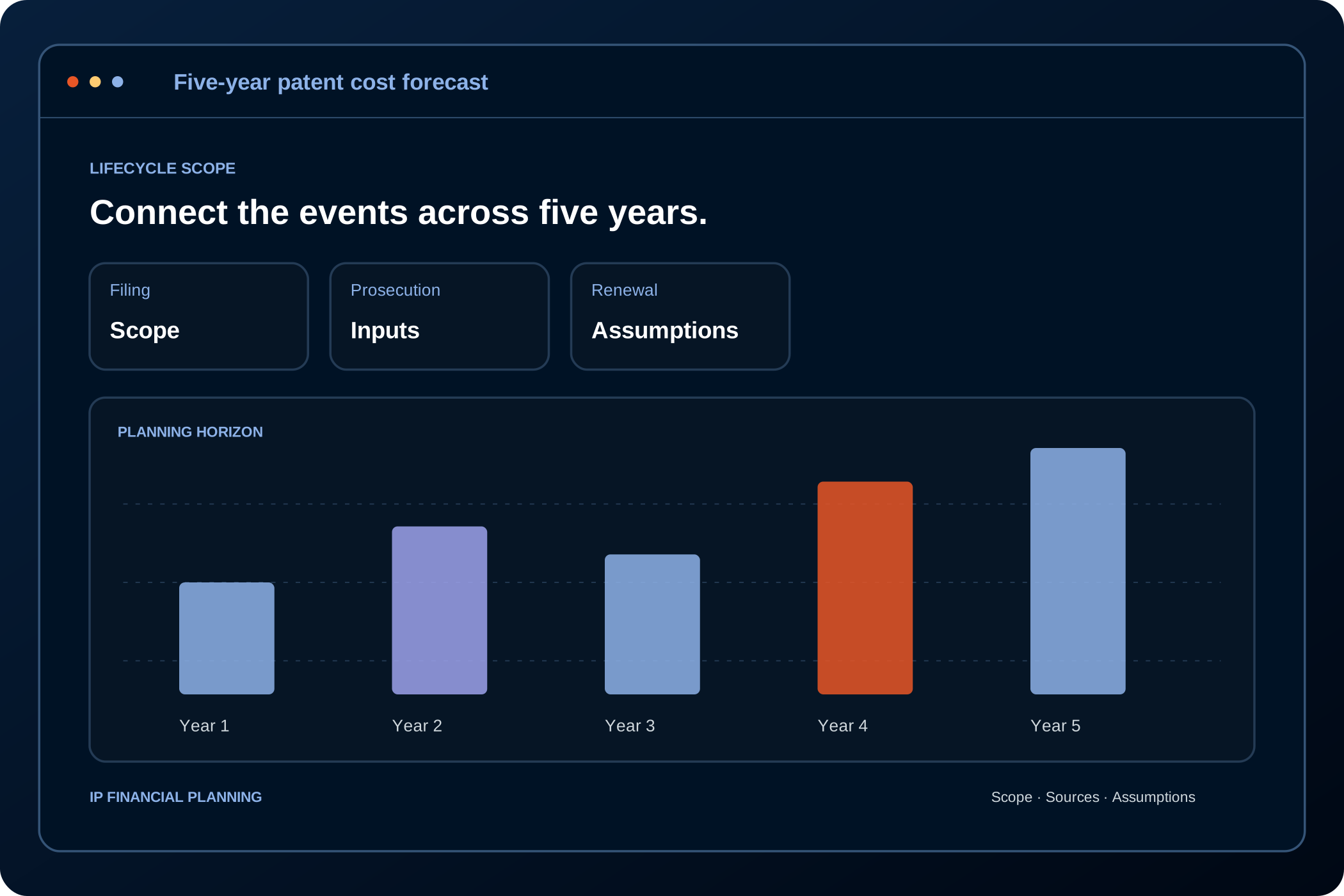
Name the matters, jurisdictions, horizon and cost types.
2
Connect the inputs
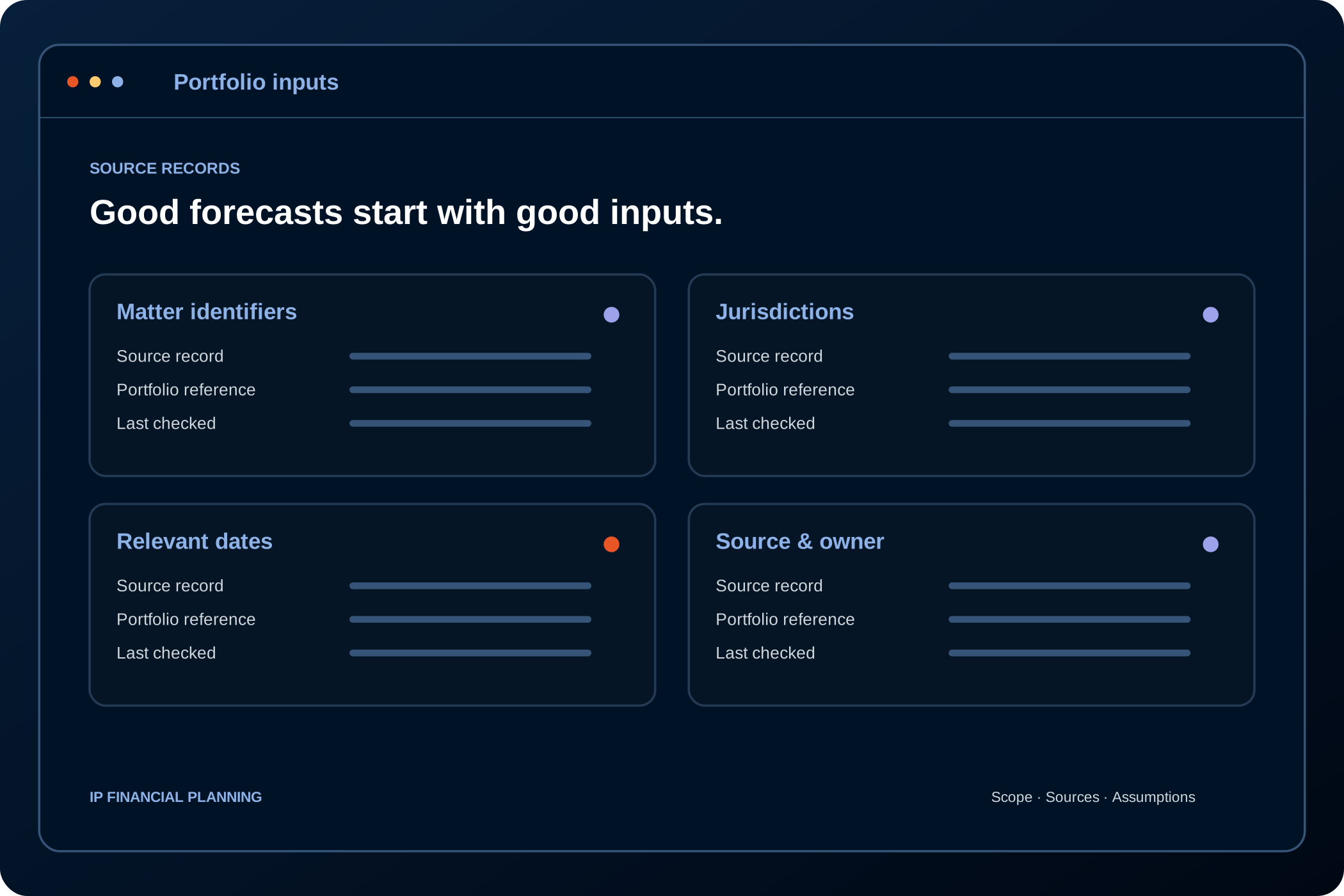
Record current status, dates, relationships and sources.
3
Expose the assumptions
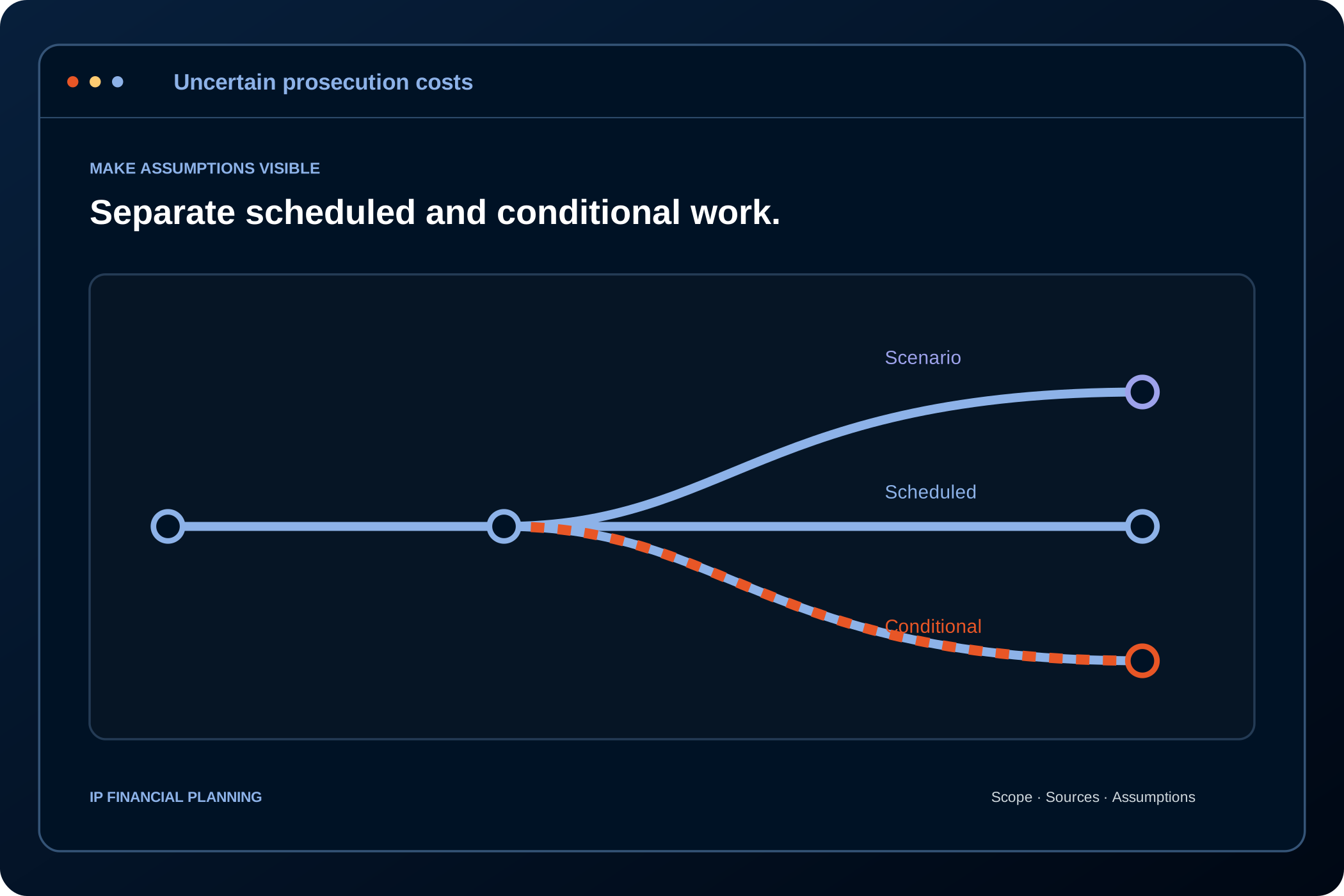
Separate known events from conditional work and review triggers.
Connect scope, inputs and assumptions to build the forecast.
Choose the question to answer next
Week 1 Forecasting guide map
Your question
Useful output
What belongs in scope?
Lifecycle cost map and a worked scope record
Which inputs are needed?
Portfolio input checklist and sample field record
How does a quote differ?
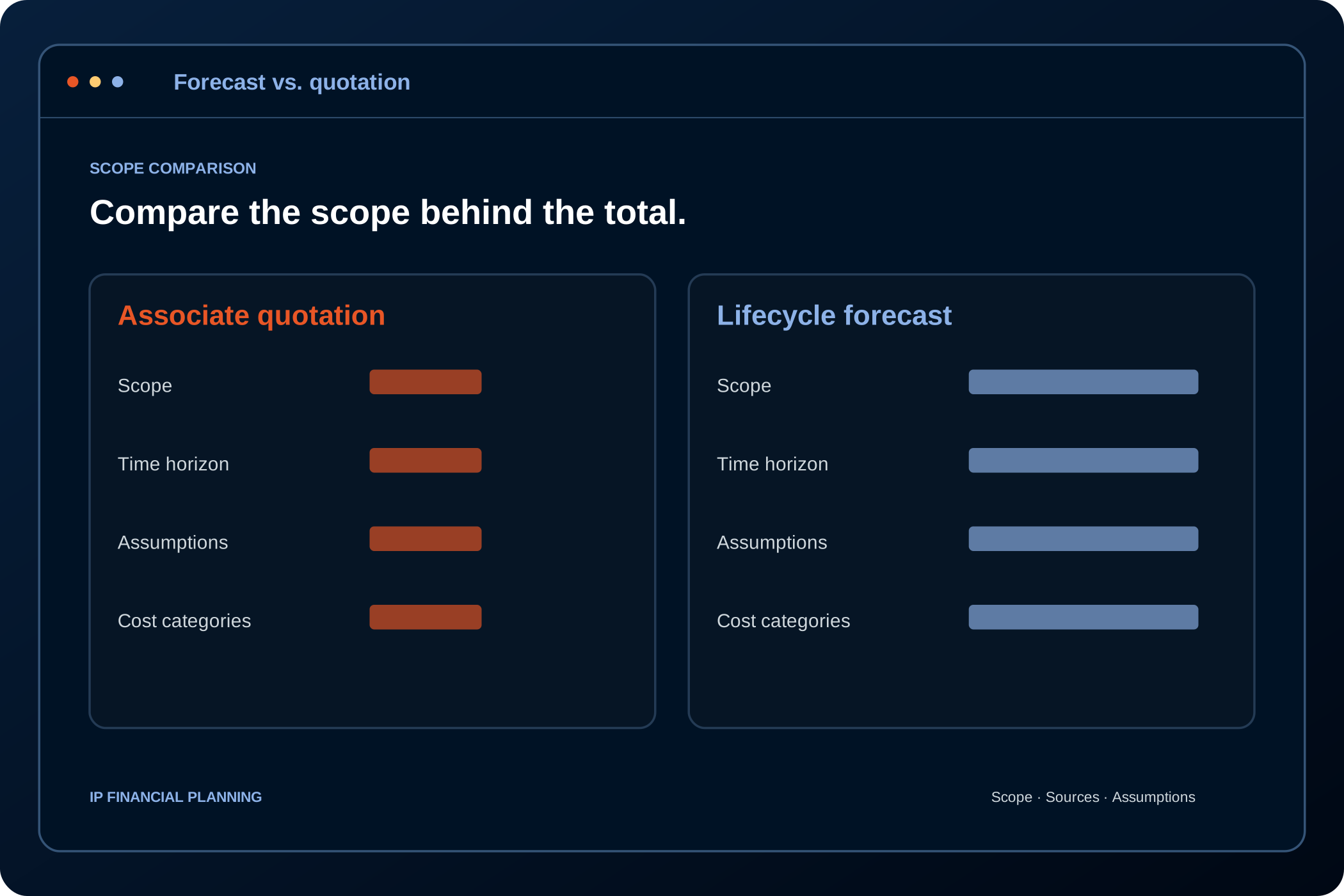
Side-by-side scope comparison
What remains uncertain?
Decision tree with explicit review triggers
On smaller screens, scroll the table sideways to compare columns.